
Fulton County Arrest Reports
The long-window source for Fulton County arrests is the Share Fulton booking dataset. One row equals one booking. Records go back to January 2014. Updates land daily, and filters can span a few days, a week, a year, or the full history. That reach outlasts the current jail roster, which shifts whenever someone is released or transferred.
Nothing here reads like a police blotter. The schema carries no names, no charges, no photographs. Instead it holds administrative facts: booking date, delivery agency, location, release date, release type, and time in custody. Use it to trace when and where bookings happened. Treat each anonymous row as a count, not a claim about a person.
Read Fulton Booking Data
Set your date range before reading anything. Decide whether you're after bookings received, people released, a delivery agency, or a facility. Booking date and release date are not interchangeable. One marks intake into the jail; the other marks the end of that recorded stay, and neither says anything about a court outcome.
- Open the canonical Share Fulton dataset and note its visible modification time. The timestamp is an observation, not a promised posting schedule.
- Set
BookingDateto the first and last date needed. Keep the local time zone in mind when a timestamp falls near midnight. - Review
DeliveryAgencyandLocationto separate the arresting or delivering agency from the detention facility. - Use
ReleaseDateandReleaseTypeonly for the custody event. Check a court portal for disposition, which means the case’s legal outcome. - For a named person, charge, bond, or booking photo, move to FCSO/Tyler, arrest inquiry, or Fulton Open Records.
The official multi-day interface is shown in the Share Fulton date-range dataset capture.
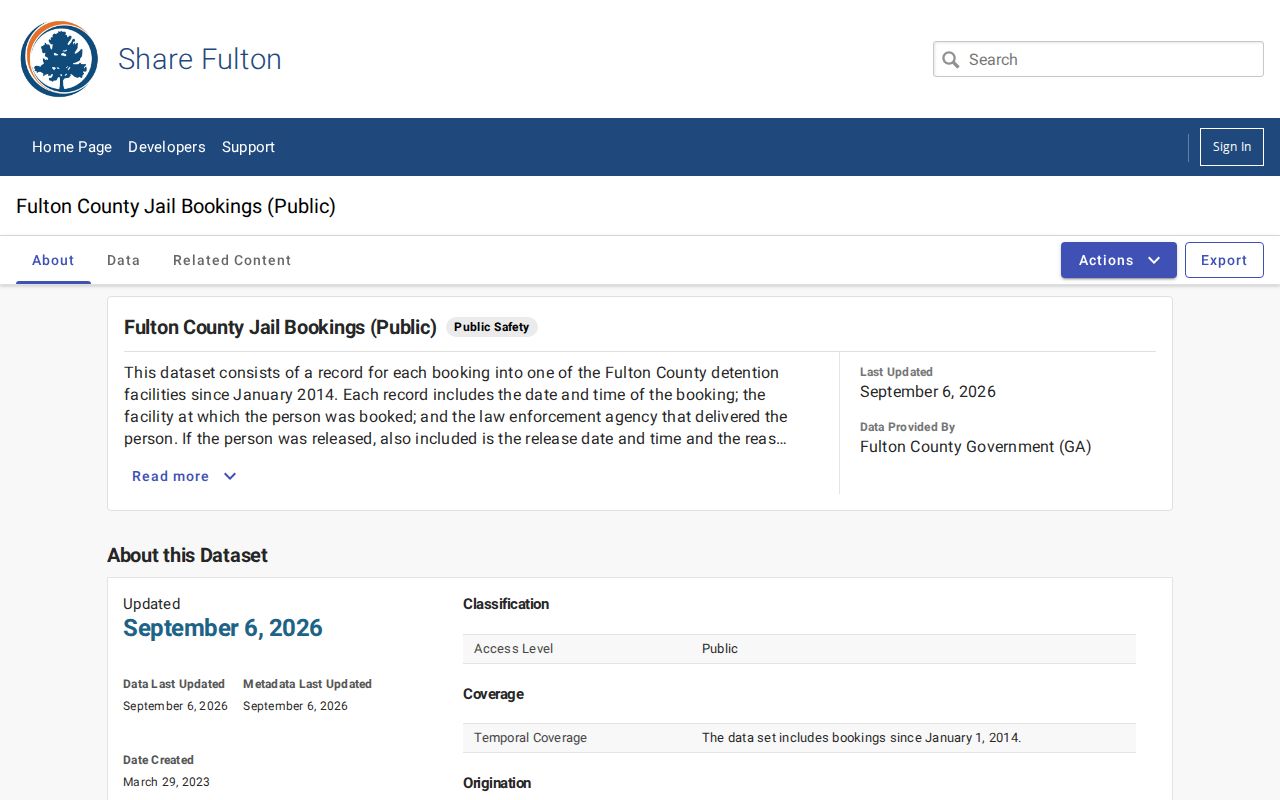
The Share Fulton page shows a dataset interface, not a gallery of people or booking photos.
Fulton Arrest Report Fields
Field names set the limits of every result. Some are plain dates or agency labels. Others group custody length for analysis. The public schema also includes row-management identifiers, and those should not be mistaken for a Sheriff booking number unless the live source says otherwise.
| Dataset field | How to read it |
|---|---|
BookingDate | Date and time recorded for intake into a Fulton detention facility. |
ReleaseDate / ReleaseType | When and how the recorded custody stay ended, if populated. |
DeliveryAgency | Agency associated with delivery into the detention system. |
Location | Facility or location label in the county data. |
DaysinCustody | Duration measure for the booking row, not a sentence or finding of guilt. |
Year, Over180Days, Over365Days | Grouping fields used for historical or custody-length analysis. |
NodeID, ID, Group | Administrative identifiers or categories whose meaning should not be expanded beyond the source. |
| Name, charge, photo | Not observed in the public schema; use person-level or records-request sources. |
A booking report is not a criminal-history report. It records an intake event. Release details may appear later. Yet a release reason alone won't tell you whether prosecutors changed a charge or the court dismissed the case.
Note: Save the filter dates and access time with any count, because a later daily update can change the result.
Weekend Fulton Arrest Reports
FCSO posts no fixed hourly, weekend, or holiday schedule for its roster or county data. One timing fact is documented, though. A weekend arrest commonly waits until Monday for first appearance. That hearing is where a judge explains the charges and takes up bond when appropriate. As a result, Monday records can look more complete. The booking may have happened days earlier.
The county dataset refreshes daily, so a row can appear after the day of intake. Its own metadata has shown modification stamps. One example is September 6, 2026, 5:22:32 p.m. Eastern. That stamp is not a nightly guarantee. Check the live metadata instead. Rerun the same date filter after the next update. Compare against the current roster if a person-level question remains.
Holiday behavior is not published. Don't assume staff post at a set hour. And don't assume a quiet dashboard means no arrests occurred. Delayed intake, delayed publication, or a source outage can all create that look.
News Behind Fulton Arrest Reports
Local journalism adds narrative to selected cases. It never supplies a complete Fulton County arrest report. WSB-TV keeps a Fulton County section with dated stories, video, and public-safety coverage. Atlanta News First runs a Public Safety & Crime section, and FOX 5 Atlanta covers big Fulton jail and arrest events. These outlets may quote police, prosecutors, or Sheriff officials and publish scene or agency images. The WSB-TV Fulton County section shows that story-driven format.
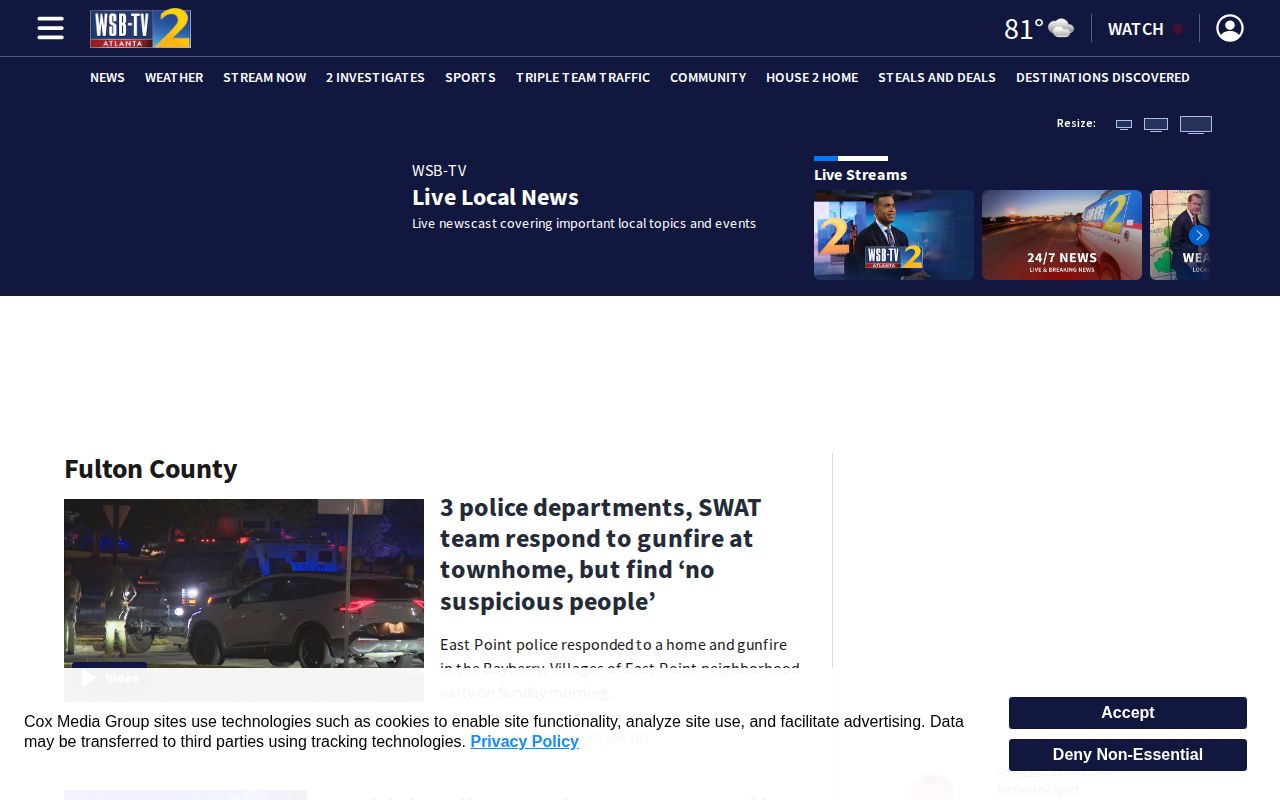
A newsroom can explain a notable event. Its story list is not a jail roster. The Atlanta News First crime section gives another editorial view of selected arrests and public-safety events.
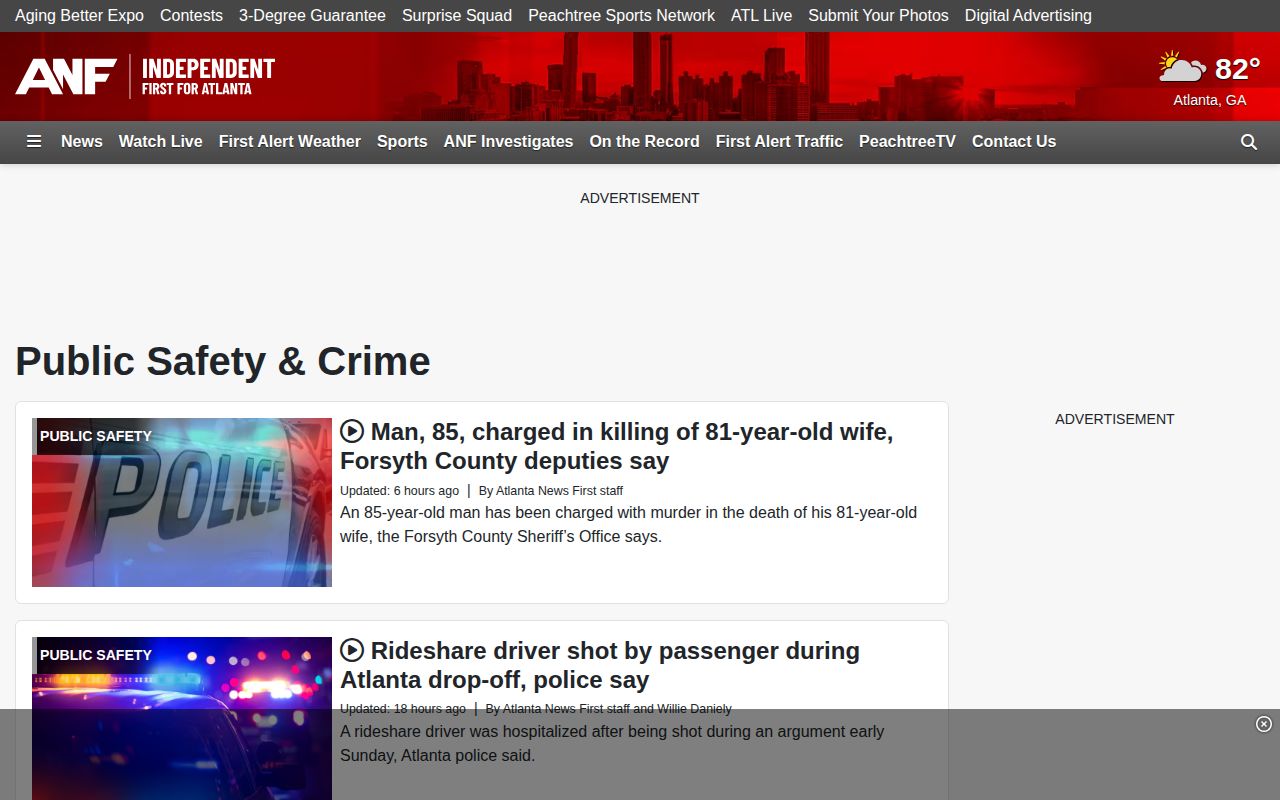
A news section makes its own publication choices, so weigh its images and claims against official custody and court sources. News is narrower than the dataset. It can also stay online after custody changes. Its value is attribution and context. Confirm any current-custody claim through FCSO, use the court case for the outcome, and see the Fulton Arrested Today page for the same-day path.
Fulton Arrest Report Archives
The online booking dataset for Fulton County reaches back to January 2014. That is the earliest depth the published records cover. Anything earlier lives elsewhere. Start with the Fulton County Sheriff's Office or Fulton Open Records. Know the person's name if you can. Note the likely booking date and the exact record you want. A formal request can pull an agency-held booking record that the current roster no longer shows. Exemptions and lawful redaction still apply.
Retention rules in Georgia set minimums. They are not promises of web access. Jail booking records stay listed for ten years after release under schedule LG-19-060. Jail registers run ten years from the last entry. The schedule is LG-19-061. Incarceration lists carry only a one-year period. None of that guarantees a record stays searchable online the whole time. Nor does it mean the record gets destroyed the day a minimum period runs out.
Older county material is a different hunt. The Georgia Archives local-government records page can point you to the right custodian. Its finding aids help too. County records normally stay with the county unless they were formally transferred. Keep this in mind. The county microfilm catalog is a finding aid, not a searchable database of named arrestees.
Match the tool to the question. Case outcomes belong with the Fulton Clerk or court portal. Someone sentenced into state custody shows up in the Georgia Department of Corrections locator. County booking, court disposition, and state-prison custody sit in three different systems.
Note: Online visibility can end before an agency's minimum retention period, so ask the record custodian rather than inferring destruction.
Verify Fulton Arrest Reports
On the roster, a release row says one thing only. It tells you the recorded jail stay ended under the type listed. It answers nothing about the underlying case. For current custody, the official FCSO inmate search is the right tool, backed by the inquiry lines at 404-613-2002 or 404-662-3516. The final legal outcome lives in the court record. Want an agency copy of the booking record or photograph? Use the Fulton Open Records route. Each source answers one question well. Keeping them separate stops a date-range report from being stretched past what it was built to do.
Details matter when you follow up. Preserve the source URL, the filter dates, the visible update time, and any row identifier. Those specifics let Fulton County staff tell a dashboard record apart from a roster entry. They also cut confusion. A release update can shift the public data after an earlier check. One warning: never substitute a screenshot of old data for a fresh official verification.